Showing posts with label Share It. Show all posts

HOW TO STEP OUT OF YOUR COMFORT ZONE

Steps

  1. 1
    Make a fool of yourself.
     Make a fool of yourself.
    Make a fool of yourself. One of the biggest things that holds many of us back is our fear of what people think. After all, you don't want people to think you're weird or rude or creepy or obnoxious or annoying, do you? But wait -- think about the most lovable, magnetic people you've come across in your life. Odds are, they weren't the meek, agreeable people who are reliably pleasant to be around. They were the people who were crazy andcharming. People who blurted out silly, maybe inappropriate things, or who made huge, slap-your-forehead mistakes, or who were over the top most of the time, but others forgave them for being less than perfect and in fact, liked them for it. So shatter your concern for what people think of you. You're allowed to be less than perfect, and you may find that people like you more for it, because it makes you a more exciting person to be around. Get laughed at, laugh with 'em. Do something you normally wouldn't do for fear of looking like an idiot. Be that idiot. You'll be fine.
  2. 2
    Face your fears.
     Face your fears.
    Face your fears. There are the big fears, such as heights, spiders, tight spaces, and germs, but there are also hundreds of subtle fears we bow to every day. Like the fear of breaking a bone, or falling down, or getting caught in the rain. What are the precautions you take every day to circumvent "negative" circumstances? And are those circumstances really worth stepping around? Those steps add up! It's good to be proactive, but it's bad to let a significant portion of your life be devoted to averting things that never happen--Little things that could turn into adventures or funny stories if you allow yourself to deal with a little discomfort.
  3. 3
    Become comfortable with taking risks.
     Become comfortable with taking risks.
    Become comfortable with taking risks. Your comfort zone is comfortable because it's where you know what to expect. Going out on a limb can be scary because you might fail. You might lose something. But you might also gain something, huh? In order to become comfortable with that uncertainty, you'll need to practice the following:

    • Non-attachment. When you decide to do something, do it for its own sake, not so that you can get a particular result. If you gamble, gamble with money you're ready and willing to lose; gamble for the fun and exhilaration of gambling. If you win, that's icing on the cake! But if you lose, no big deal. In other words, let go of your attachment to a certain outcome; instead, focus on the joy of doing whatever you're doing. Live in the moment.
    • Acceptance. When things don't go your way, and they won't, shrug it off. If you're clinging to your comfort zone, you're hanging on to an idea that the world is supposed to be a safe, predictable place, and that's an illusion. You're setting yourself up for frustration and disappointment. Open your eyes. The world is a dynamic place where things go right and wrong. That's just the way it is!

  4. 4
    Enjoy the unknown.
     Enjoy the unknown.
    Enjoy the unknown. When is the last time you felt excited about not knowing what was going to happen next? If you're deep in your comfort zone, it's probably been a while. Don't you miss it? Don't you miss the mixture of anticipation and anxiety that makes your heart flutter and stomach turn at the same time? Bring that feeling back into your life.

EditTips

  • Find or date someone crazy. When you discover that person who brings out the adventurous side from within you, it will help to encourage your development tremendously. These people can be easy to spot and will be found, for example, five miles away from home after packing up only a camera, tent, and food, to go camping in the woods. Spontaneity is a great contrast to someone like yourself who may not be comfortable or familiar with stepping out of your comfort zone often.

EditWarnings

  • Don't confuse stepping out of your comfort zone with being reckless and stupid. There's a difference between being reckless and accepting risks. Reckless people don't accept risks-they don't even think about them. You should know the risks, and decide to go through with the decision anyway, ready and willing to accept the consequences if things don't work out.


Saturday, September 28, 2013
Posted by Unknown

the MOST inspiring video

If you had a dream, and you can't get it, after you pray and work hard as you can.
"Let it go because we don't know what God plan to do"


Tuesday, August 27, 2013
Posted by Unknown

How Deaf People Think

Have ever wonder how deaf people think?


deaf symbolToday I found out how deaf people think in terms of their “inner voice”.  It turns out, this varies somewhat from deaf person to deaf person, depending on their level of deafness and vocal training.
Those who were born completely deaf and only learned sign language will, not surprisingly, think in sign language.  What is surprising is those who were born completely deaf but learn to speak through vocal training will occasionally think not only in the particular sign language that they know, but also will sometimes think in the vocal language they learned, with their brains coming up with how the vocal language sounds.  Primarily though, most completely deaf people think in sign language.  Similar to how an “inner voice” of a hearing person is experienced in one’s own voice, a completely deaf person sees or, more aptly, feels themselves signing in their head as they “talk” in their heads.
For those deaf people who are not completely deaf or wear devices to allow them to hear somewhat, they will often experience more vocal language in their “inner voice” in proportion to how much they can hear.
Interestingly, deafness is significantly more serious than blindness in terms of the effect it can have on the brain.  This isn’t because deaf people’s brains are different than hearing people, in terms of mental capacity or the like;  rather, it is because of how integral language is to how our brain functions.   To be clear, “language” here not only refers to spoken languages, but also to sign language.  It is simply important that the brain have some form of language it can fully comprehend and can turn into an inner voice to drive thought.
Recent research has shown that language is integral in such brain functions as memory, abstract thinking, and, fascinatingly, self-awareness.  Language has been shown to literally be the “device driver”, so to speak, that drives much of the brain’s core “hardware”.  Thus, deaf people who aren’t identified as such very young or that live in places where they aren’t able to be taught sign language, will be significantly handicapped mentally until they learn a structured language, even though there is nothing actually wrong with their brains.  The problem is even more severe than it may appear at first because of how important language is to the early stages of development of the brain.  Those completely deaf people who are taught no sign language until later life will often have learning problems that stick with them throughout their lives, even after they have eventually learned a particular sign language.
It is because of how integral language is to how our brains develop and function that deaf people were once thought of as mentally handicapped and unteachable.   One can see how observing someone who can’t communicate due to lacking any language and who lacks much self awareness might appear this way.  However, in recent history, up until the 1970s, it was still thought that deaf people were somehow mentally handicapped.
How could this be when they had various sign languages and even vocal training to allow their brains to develop and function properly?  Well, the problem stemmed from the fact that in the 1880s it was decided that deaf people should not use sign language; rather, they should be forced to use spoken language almost exclusively.  This seems reasonable enough on the surface as deaf people are fully capable of learning spoken language and this would allow them to more completely integrate into the hearing world.  The problem with this was only recently discovered and indeed many of the negative implications are only just now being understood.
It turns out, completely deaf people who are forced to use only spoken language are only slightly better off than those who know no language, in terms of their brain functions.  Recent research has shown the brains of the completely deaf never fully associate spoken language in the way sign language gets ingrained in their brains as a language; principally they never develop an “inner voice”, which is necessary for our brains to process information.
They do gain significantly more sense of self and better memory and the like over those who have no language, but in this state, they will never fully reach their brain’s potential as in when they learn sign language.  “There is still a lot of debate over what are the minimal levels of exposure needed to stimulate the language centers. But it is clear that deaf children need early experience of some sort of language if they are going to be good communicators in later life,” says Professor David Wood, a leading deaf educationalist at Nottingham University.
Because of these findings, the “oralist” method of teaching the deaf that had endured for just under 100 years is being rapidly phased out in favor of a “bilingual” education where sign language is taught as early as possible and vocal language is taught as a sort of secondary language.  “Bilingualism is still very much a hot potato. We have come in for a lot of flak and been accused of pushing deaf children into a signing ghetto. Yet the deaf had a big price to pay when the old methods failed. Not only could they not communicate, but they were left without a code to think in. We can no longer ignore what the research tells us,” says Miranda Pickersgill, chief of deaf services for Leeds Local Education Authority.
Bonus Facts:
  • On the “self awareness being tied to language” note, I found this quote from Helen Keller interesting: “Before my teacher came to me, I did not know that I am. I lived in a world that was a no-world. I cannot hope to describe adequately that unconscious, yet conscious time of nothingness. (…) Since I had no power of thought, I did not compare one mental state with another.”   Hellen Keller, 1908: quoted by Daniel Dennett, 1991, Consciousness Explained. London, The Penguin Press. pg 227
  • The theory behind why those completely deaf people taught only vocal language don’t properly develop an “inner voice” is that without being able to associate sounds with the phonemes and complete words, the language is too abstract and a brain without language already struggles with things that are abstract.  Those deaf people who learn sign language, however, have less trouble with comprehending vocal language and, as noted earlier, have the ability to have an “inner voice” that speaks.  This is thought to be because once the brain has a structured language from which to “run” off of, similar to a computers operating system, abstract concepts can be more easily grasped; thus, comprehending vocal language sounds and text becomes significantly easier.
  • It turns out, our brains treat sign language exactly as it treats spoken language, even using the exact same part of the brain to process it.  This is counterintuitive as you’d think the brain would use some part of the right hemisphere with sign language being visual.  It turns out though that it uses the same portion of the left hemisphere to process sign language as it does for vocal language in the hearing.
  • Interestingly, if you take a deaf person and make them grip something hard with their hands while asking them to memorize a list of words, this has the same disruptive effect as making a hearing person repeat some nonsense phrase such as “Bob and Bill” during memorization tasks.
  • The sign language most often used in the United States is American Sign Language (ASL).  This is very different from many other types of sign languages like British Sign Language (BSL), which is completely unintelligible to someone who uses ASL and vice-verse.  One of the big differences between ASL and many other sign languages is that ASL primarily uses only hand gestures, whereas most types of sign languages, such as BSL, rely heavily on facial expressions and other physical expressions outside of hand and finger gestures. (Based on comments, it appears this factoid is out of date and this is no longer the case with facial expressions now being an integral part of ASL.)
  • While there are many standardized sign languages used, unlike spoken languages, there are also literally thousands of simple sign “languages” used among family units.  This is particularly the case with non-deaf parents that have a deaf child.  They will often develop numerous home signs and some sort of structured system of using the signs to communicate.  These simple “languages” are typically called homesign or kitchensign.
  • Ever wondered how the deaf wake themselves up in the morning?  Well, there are many different ways, none being quite as fool proof as a blaring loud noise is among the hearing.  The most foolproof method, outside of someone just coming to wake you up, is a very strong vibrating accessory attached to a special alarm clock.  The attachment is then generally placed under the pillow or on the bed near the person.  Another common method is an alarm clock that has a bright light attached that points at the sleeper.  When the alarm goes off, it flashes brightly on and off.  Due to the fact that the majority of deaf people are very heavy sleepers, as you might expect, this method doesn’t work as well as you might think.  Yet another method is programming a house or room heater to heat the room to high temperatures around the time the person needs to get up.  This, again, isn’t the best method for heavy sleepers and can result in the other downside of sweaty blankets and sheets. :-)
  • Contrary to popular belief, most sign languages bear little resemblance to the spoken language from the same area as the particular sign language.  In other words, in the majority of cases, the various sign languages used were not developed from spoken languages.  In fact, American Sign Language resembles Chinese in form more than it does English in terms of a single gesture often represent a phrase or whole idea, rather than a single word.   Further, most sign languages were invented by the deaf and thus bear little real resemblance to spoken language in form.
  • Similar to spoken language, sign languages have accents.  Typically these manifest themselves in small variations in how one does a gesture or the like.  For instance, in British Sign Language, the gesture for “car” is holding up two fists at the 10 o’clock and 2 o’clock position and wobbling slightly as if steering a wheel.  However, in Newcastle, England, the fists are held together with fingers extended slightly, but with the same motion.  In these cases, the overall gesture is very similar within a specific sign language,  but the exact gesture varies from region to region.
  • In addition to the “region to region” accents, deaf people can typically readily identify those deaf people who began signing later in life by their “late learner” accent.
  • Interestingly, one of the marks of a “southern” American Sign Language (ASL) accent is that southern signers sign much slower than northern signers, essentially mimicking the southern drawl in sign.
  • Along with differing accents, there are numerous dialects, among various deaf communities, that technically use the same sign language.  This is largely due to the various homesigns that find their way into these groups particular dialects.   For instance, it is estimated that only about 80% of the British Sign Language (BSL) is universally understood by all users of BSL.  The other 20% or so of the language varies from region to region.
  • Deaf people typically clap by striking their hands together only when surrounded by hearing people.  Otherwise, they use the more expressive motion of raising their hands and twisting their wrists rapidly to “clap”.
  • The earliest record of sign language being used dates all the way back to the fifth century B.C., in Plato’s Cratylus, where Socrates states: “If we hadn’t a voice or a tongue, and wanted to express things to one another, wouldn’t we try to make signs by moving our hands, head, and the rest of our body, just as dumb people do at present?”
  • In 1880 and international congress of deaf teachers voted to abandon sign language and teach only oral language to the deaf.  This was in an effort to allow them to integrate into hearing society.  This oral method has endured until very recently when research has demonstrated just how catastrophic this is on the proper cognitive development of deaf people.
  • The first research showing the failure of the oral method was done by Cambridge Professor Ruban Conrad in the 1970s who tested reading ability in deaf teenagers trained in the oral method.  He discovered that while the average deaf teenager could read individual words at about an eight year old level, they read without understanding, particularly when it came to taking in the meaning of a full sentence.  The problem was that they had not adequately been able to develop an “inner voice” due to being restricted to oral language which they could not hear.  Thus, without the inner voice, there was no auditory imagery to linger in short term memory while they took in the whole sentence.
  • About one person out of every one thousand born is born completely deaf.
  • It is quite common for deaf people, when they are dreaming, to not only communicate in their dreams using sign language, but also to communicate telepathically and sometimes even verbally even though they may not know how to speak verbally in the waking world.  One deaf person notes: “I think most common one would be telepathy but there have been times when I wake up signing. People who have slept over at my home have heard me talking verbally in my sleep. I recall one ex boyfriend who said that he could understand what I was saying perfectly! How ironic, I speak better in my sleep than I do while awake.”
  • The critical age for learning language is around 21 to 36 months old.  During this period, much of the cognitive infrastructure in a person’s brain is developed and it is thought, much of it is developed as a result of learning language.
  • Research has shown that deaf people are able to learn a sign language, such as ASL, significantly faster than the non-deaf learn spoken language.  One deaf orphan, who was three at the time he was placed with his new family and had no knowledge of ASL, recounts the following on this issue:  “On the way home from the airport, which was about four hours drive, my mom brought a children’s book and she was ready to teach me signs right there in the car. My first education happened in a car! We were sitting in the backseat, with my dad on my left and my mom on the right. My uncle was doing the driving. My parents showed me how to sign those pictures in the book like animals, trees, etc. My mom said by the time we got home, we had finished the whole book and I’d learn all the signs from the book. After one week, I had learned enough signs that we were signing normally as if we were together since I was born. One week was all it took…”
  • Sign Languages are not often written due to the incredibly complexity of trying to replicate the non-sequential nature of signing.  For instance, in spoken language, if you wanted to say “I walked home” and then say something about your walk home;  perhaps, “It was nice out and I enjoyed the walk.”  You’d need to add that sentence in a sequential fashion.  In sign languages such as BSL, you’d use your hand gestures, facial expressions, etc. to express things like that the walk was on a dirt road; it was nice out; and you enjoyed the walk, with it all expressed simultaneously.  This non-sequential nature of sign languages allows for faster and more detailed communication, but has the drawback of being ridiculously hard to put into print, though attempts have been made.
  • The first modern treatise on the subject of sign language was published in 1620 by Juan Pablo Bonet called: Reducción de las letras y arte para enseñar a hablar a los mudos (‘Reduction of letters and art for teaching mute people to speak’)
  • When reading articles written by people who are actively members of the deaf culture, you’ll often notice when they write, they sometimes capitalize the “D” in “Deaf” and sometimes not.  What’s going on here is that people who are referred to as “deaf” (with a little “d”) are people who are medically deaf, but not an active member of the deaf culture and may even shun it to a certain extent or be completely oblivious to its existence. In other words, they generally hang out with and associate with hearing people, even though they are medically deaf.  “Deaf” (with a big D), on the other hand, refers to the deaf culture, people who actively embrace their deafness and are members of the deaf community or culture, even to the point that sometimes people who are Deaf and have the option, may shun getting a medical implant that would allow them to hear as up to that point, they may have lived their whole life in the “Deaf world” and have no interest in being able to live in the “hearing world”.
  • On a related note, you also may occasionally read that the distinction between big “D” and little “d” in the deaf culture has to do with the level of hearing the person has, with “big D” implying that the person is totally deaf, whereas “little d” implies only partial deafness or someone who has a medical device that allows them to hear.  This, however, is a “big D vs little d” distinction that is no longer generally used and the above listed definition is drastically more popular. Although, of course, there is sometimes a correlation between the two definitions in that people who are fully deaf often gravitate towards other people who are deaf in their social lives and people who have some hearing may well gravitate more towards a “hearing” culture. In any event, one commenter below summed the “big D vs. little d” distinction quite nicely, “D/deaf… refers to being culturally Deaf (D) vs. being ‘medically’ deaf (d).”

Read more at http://www.todayifoundout.com/index.php/2010/07/how-deaf-people-think/#OGm2xtuulkcVc7cm.99 
Wednesday, June 26, 2013
Posted by Unknown
Tag :

Khutbah Jumaat (21-JUN-2013)

khutbah jumaat kali ni menyentuh tentang rajin datang ke rumah Allah SWT. antara ayat yang saya rasa sangat best dan nak share dgn pembaca ialah bila " kalau kita tak jaga masa solat kita apa benda yang kita ada lagi nak bawak dekat akhirat."..... fikir-fikirkanlah.... berapa banyak sangatlah pahala yang kita ada sekarang kalau nak dibandingkan dengan dosa-dosa yang kita buat.
Thursday, June 20, 2013
Posted by Unknown
Tag :

Titanic Lesson For Mankind


They've said that even a God can't snap it.
But God just did. 
Lesson : Don't challenge Almighty Allah SWT. Be humble because everything that is good comes from Him.
Saturday, June 15, 2013
Posted by Unknown
Tag :

Iqra'-Baca-Read


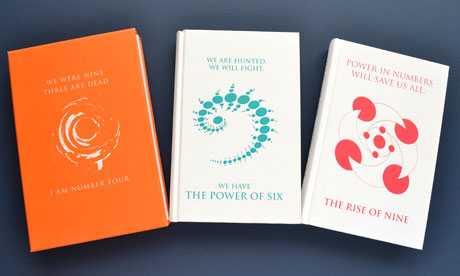
Every readers must have their favorite series right especially teenagers. Some people reads Harry Potter series or Twilight or even Fixi.
I personally think it's great for someone who just want to start reading to start with this few light novel books. It's so short you can just finish them in one week . well that's my speed of reading per book. Although some people our reading materials not matured enough but I think it's okay, people interest change due to their surrounding. I can relate to that because there are sometimes that I prefers a novel about friendship and sometimes about love and also a bit adventure such as Lorien Legacies.

It's a bit sci-fi but I love it. But personal favorite is
but most of the times I use this because it handy and portable

iQuran. Its so easy and friendly to use also with translation. and when you found some interesting quote you can directly share it via Facebook twitter or any social media that was provided.
There are also plenty of eBook out there just install it to your smartphone. So read everybody because reading makes your world simply BIGGER.
Friday, June 14, 2013
Posted by Unknown
Tag :

First time buat biskut sendiri


ni pakai intant je, xde alat nak sukat2 kat rumah, hihihiih still masih boleh dimakan. :-)

gambar cake xambik pulak, masak pkai stim. Alhamdullilah jadi dan sedap.

Looking foward to making my first bread.
Wednesday, June 12, 2013
Posted by Unknown

Wisest Male Teen Ever?

For some of us, do you remeber watching Lizzie McGuire, its a teen sitcom on a normal average teenage american girl. But in this post I would like to share Gordo's wisdom.

source :http://blogs.disney.com/oh-my-disney/2013/06/11/is-gordo-the-wisest-teen-ever/?cmp=SMC|blgomd|OMDJune|FB|Gordo-LizzieMcGuire|InHouse|061113|text||esocialmedia|||


IS GORDO THE WISEST TEEN EVER?

Gordo has always been a fan favorite. We loved watching him, Lizzie, and Miranda navigate the choppy waters of adolescence during the show’s heyday but at the time, we did not fully appreciate Gordo for the genius he was. Re-watching the show as our older, more seasoned selves, it’s clear: Gordo might be the wisest teen ever. Honestly.

On appearances: “You’ll never figure out who you are if you’re trying to be somebody else.”
lizzie-mcguire-be-yourself

On social status: “Who you are is way more important than who you sit with at lunch.”
lizzie-mcguire-cafeteria

On politics: “If she wants to be the voice of the people, she’s gotta hang with everybody. Not just the drama club.”
Lizzie-McGuire-Drama-Club

On being a teenager: “Parents scrape and sacrifice to provide us with shelter, support and guidance, and in return, we have as little to do with them as possible. It’s nature’s law.”
lizzie-mcguire-teenager

On dating: “Everyone’s paired off. It’s like Noah’s Arc, but with fluorescent lighting.”
lizzie-mcguire-dating

On acceptance: “Yeah, well, there’s lots of weird stuff in this world—tofu bacon, hairless cats, country music.”
lizzie-mcguire-acceptance

On sharing information with parents: “As little communication as possible. It prepares us for marriage.”
lizzie-mcguire-communication

On growing up: “Being humiliated during puberty can have deep and lasting psychological consequences.”
lizzie-mcguire-humilation

On money: “Free? Free is my favorite number.”
lizzie-mcguire-free

Who says things like this? Answer: Only your wise grandfather and David “Gordo” Gordon.
Tuesday, June 11, 2013
Posted by Unknown
Tag :

We are just Human


Its normal to judge someone, its a normal human instinct to survive, but we must RESPECT them, no matter who and how they are .
Sunday, June 9, 2013
Posted by Unknown
Tag :

UBAH SISTEM ORENTASI


Minggu orientasi

Kalau dah sampai buat orang sangat keletihan, penuh dengan pekik-mekik fasi, tidur sejam dua, ceramah panjang berjela, taklimat berguni-guni, sikit-sikit nak raging..

Kalau dah macam tu lah 'minggu silaturrahim', apa benda yang seronoknya? Apa yang kenangan manisnya?

Terfikir.

Hari pertama jejak kaki di kampus sudah berjaya ditimbulkan rasa meluat. Masuk dengan rasa nak sayang universiti, tapi hari pertama dah rasa benci. Ah, hari seterusnya bagaimana...?

Kalau berorientasikan Islamik tu okaylah juga.

Ni tak. Orientasi dengan teknik dan gaya sama. Ulang tayang sketsa fasi2 lama.

Sampai bila?

----> untuk difikirkan... sila berfikiran terbuka
kalau UIA boleh buat kenapa Universiti lain tak boleh kan....
luahan bekas budak semi UIA ,matrikulasi dan Univerisity Malaya iaitu saya.
Posted by Unknown
Tag :

We Only Accept The Love That We Think We Deserve.


Based on the title, it was quote from my favorite all time novel which is The Perks of Being a Wall Flower. The supporting character Charlie teacher said this " We Only Accept The Love That We Think We Deserve." when charlie ask him that why people choose a wrong person in a love life thus ending up hurting themselves. as a reader, the moment I read the word, it just hit me, how come I didn't see that before. We accept the love and reject it because it just feel right .
That all for this week, just want to share my favorite quote.
Thank you for reading.
Saturday, June 8, 2013
Posted by Unknown
Tag :

Countdown for Amazing Blogging Experience

1 day left.
Friday, June 7, 2013
Posted by Unknown
Tag :

Khabarkanlah Cintamu Kepada Allah ( ctrl C +ctrl V)


"jika kita mencintai seseorang biarlah kita mendiamkan diri kerana apabila kita diam itulah yang menjadi tanda cinta kita pada nya. Dan khabarkanlah perkara ini kepada Allah, kerana dia mengetahui segalanya daripada kita"
Memang benar apa yang apa yg terdapat dalam ayat di atas, dan saya tidak nafikan dan bukannya untuk dibanggakan tetapi sebagai perkongsian bersama kerana perkara inilah yang saya pegang hingga hari ini. Tapi bagi sesetangah orang perkara ini payah kerana ada segelintir orang sahaja yang sanggup menaggung rasa di hati dan menyatakan nya kepada Sang Pencipta.
Di sini saya ingin berkongsi apa yang saya baca mengenai "Cinta Mengikut Islam" ini;
1 ) Pendam dan luahkan pada Allah
Pertama sekali, jika kita mencintai seseorang haruslah kita pendamkan dahulu dan menyatakan hasrat kita kepada Allah. Kita tidak perlu terburu buru takut perempuan/lelaki itu mencintai orang lain kerana jodoh ini adalah semua aturan Allah. Allah lebih mengetahui apa yang kita tidak ketahui.
Justeru, menyatakan perasaan kita kepada Allah terlebih dahulu, itulah cara yang paling terbaik kerana insyaAllah, Allah tidak akan memberi sesuatu kepada kita melainkan kita berhak mendapat nya dan dalam bab jodoh ini kita berusaha lah menjadi hamba Allah yang terbaik. Niatkan pertamanya apa yang kita lakukan ini bukanlah semata-mata untuk mendapatkan jodoh yang baik, tetapi adalah semata-mata kerana Allah.
Allah Maha Pengasih lagi Maha Penyayang. Setiap kebaikan itu pastinya akan diganjari dengan kebaikan pula. Demikianlah juga dalam perihal jodoh sesudah kita mantapkan diri atas apa yang kita lakukan semata-mata kerana-Nya, sudah tentulah Allah akan berikan yang 'sekufu' iman dengan kita. Jika kita berusaha menjadi hamba yang soleh/solehah, maka Allah berikan kebaikan ke atas usaha itu.
Allah telah janji dan berfirman dalam kitabNya yang bermaksud;
"Lelaki yang baik untuk perempuan yang baik begitu lah sebalik nya"
(Surah an-Nur ayat 26)
2) Nilai dan selidiki sebelum mencintai
 Cinta itu hadir tanpa kita sangka. Kadang-kadang ianya berputik tanpa kita sedari. Ada pula yang hadirnya walau hanya pertama kali bertentang mata (sekali pandang). Namun, sebelum kita membiarkan cinta itu tertanam di lubuk hati kita yang paling dalam, maka nilailah cinta kita itu semula.
Adakah cinta kita itu untuk dunia sahaja? Kerana kemewahannya kah? Untuk memuaskan nafsu diri kah? Atau semata-mata kerana untuk menyempurnakan agama? Andai cinta kita kepada seseorang itu hanyalah kerana nafsu dan dunia, maka rugilah kita kerana kita tidak akan dapat apa-apa melainkan kepuasan hanya di dunia. Tetapi jikalau kita mencintai seseorang kerana Allah dan berniat untuk memuliakannya dengan ingin menikahinya maka besarlah pahalanya sedang perkahwinan itu diibaratkan seperti membina sebuah rumah Allah.
Mungkin ada yang berkata;
" Tak kan la awak kahwin itu bukan sebab kecantikannya"
"Aik, awak nikah ni tanpa nafsukah?" 
Ya, benar!. Sebagai manusia kita dikurniakan nafsu, cintakan kecantikan. Hakikatnya semua manusia cintakan kecantikan, hatta Allah juga sangat mencintai kecantikan kerana Allah itu bersifat dengan kesempurnaan. Begitu juga dengan bernikah kerana nafsu. Namun, antara asbab itu, jadikanlah pernikahan kerana Allah itu berada di tingkatan yang paling atas. Nikah kerana Allah itu yang paling utama dan pertama.

3) Jauhilah 'bercouple"
Andai diri telah mencintai seseorang, maka berusahalah untuk menghindarkan diri kita dari ber "couple" kerana perkara ini langsung tidak dianjurkan dalam Islam. Sesungguhnya budaya couple ini bukanlah satu pegangan Islam kerana padanya terlalu banyak perkara-perkara yang boleh membuatkan pasangan bercouple ini lebih cenderung kepada mendekati zina.
Sepertimana di dalam al-Quran ada menerangkan, "la taqrabuz zina" yang bermaksud, "Janganlah kamu dekati zina"  yang mana para ulamak mengistinbatkan hukumnya sebagai haram. Maka, apakah dengan bercouple juga tidak termasuk di dalam mendekati zina? Walaupun mungkin ada antara pasangan couple yang berkata;
"Saya tidak pernah keluar berdua dengan dia"
"Ana jarang telepon..."
"Awek aku tak pernah sms pun. Kalau ada pun perkara yang penting je"
Namun, tanpa sedar kita tidak tahu bahawa kita sedang melaku zina hati yang mana sedikit demi sedikit akan membawa kita melakukan dosa yang lebih besar. Nau'uzubillah
4) Solat Istikharah dan musyawarah (berbincang)
Sebaik-baik keputusan ialah dengan meminta petunjuk kepada Allah dan bermusyawarah (berbincang) meminta pendapat daripada orang yang dipercayai. Tiada seorang pun yang Allah janjikan akan merasa rugi dengan bermohon kepadaNya. Maka, andai diri telah nekad dan memilihnya kerana Allah atas asbab agamanya, solatlah istikharah mohonkan petunjuk yang terbaik untuk agama kita, kehidupan kita pada masa itu mahupun pada masa yang mendatang. 
5) Bertindaklah ke arah kesempurnaan Iman
Alhamdulillah, jika Allah telah berikan kelapangan di atas solat istikharah yang kita lakukan. Salah satu daripada petunjuk istikharah selain mimpi ialah apabila hati kita terasa lapang dan yakin dengan keputusan yang ada. Maka, bertindaklah. Bertindak di sini ialah dengan memilih seseorang menjadi wakil kita untuk meneruskan hajat kita.
Sesungguhnya Islam agama yang indah. Jika dijadikan pegangan dan cara hidup pasti hidup terasa mudah. Demikianlah juga adat yang ada. Maka, selagi adat tidak menyalahi syariat, gunakanlah 'adat' seperti merisik, bertunang dan seterusnya. Semoga Allah merahmati dalam menuju ke arah kesempurnaan iman itu.
Saudara saudari saya sekalian, couple ni memang indah tetapi beracun. Saya tidak mahu rakan-rakan saya diluar sana terkena mainan syaitan ini kerana saya juga pernah merasainya sekali suatu ketika dahulu. Memang benar, pada mula berasa semuanya manis, namun pertengahannya semakin kurang dan akhirnya tawar dan pahit sekali untuk ditelan. Moga ianya menjadi pengajaran buat saya.
Marilah kita sama-sama berdoa kepada Allah supaya semua hubungan kita dengan manusia mendapat keredhaanNya dan Allah akan menjadikan kita insan yang lebih baik supaya insyaAllah kita dikurniakan pasangan yang juga baik. 
Tuesday, June 4, 2013
Posted by Unknown
Tag :

virus kedai printer, jadi shortcut. [SOLVED]

download  smadav
link
http://www.smadav.net/
Monday, June 3, 2013
Posted by Unknown

Senyum

Whoever is reading this, you are beautiful and someone out there is crazy about you. So smile, life is too short to be unhappy.
Posted by Unknown
Tag :

Study week begin

Ok skarang semangat nak study. Jom kekalkn momentum ni
Friday, May 31, 2013
Posted by Unknown
Tag :

Electtomagnetic

My long term dream is to develop new green energy based on electromagnetic. So that is my phd research. Inshaallah.
Thursday, May 23, 2013
Posted by Unknown

PESTA PESTA PESTA KO-K

            Fakulti SKET nak buat pesta KO-K, pada mereka yang bosan duduk kat kolej jer cuba lah datang pesta ni, nasihat saya " JUST JOIN WHATEVER YOU FEELING LIKE TO JOIN, TAPI KENA KASI KOMITMEN LAH LEPAS TU" . jangan jadi macam biskut.


Ini ialah detail pesta tersebut...


Pesta Ko-K
Date: 30th May 2013
Venue: Dewan Tunku Canselor, UM
Time: 9am - 10pm
Breakdown: 9am - 4pm: Exhibition & 730pm-9pm: Performance
Key Points:
  • Part of the program is the Cultural Night
  • NGOs who are engaged in the education, care or counselling services to youth.
  • A venue to showcase student's skills & talents, can also be a venue to inform,show & disseminate to our society & nearby community what our students do during the semester.


Tuesday, March 5, 2013
Posted by Unknown
Tag :

Intro To My Legacy


                        Dalam blog ini saya akan post serba sedikit tentang kehidupan saya yang saya ingin kongsikan. Harap para pembaca akan terhibur dengan penulisan saya akan datang. Ini ialah serba sedikit biografi tentang saya. Nama diberi ialah Muhammad Faizal Bin Abd Aziz , rakan-rakan sering memanggil saya Faizal, Pe'jal atau Fesal.
Surau As-Sufi Kolej Matrikulasi Selangor.
                        Dilahirkan di Lumut,Perak bertarikh 20 Oktober 1993. Menetap di Kg. Melayu Subang. Mendapat pengajian awal di Tadika Pasti Al-Firdaus, kemudian Sekolah Agama Kg.Melayu Subang & SK Subang. Dan mengharungi usia remaja di SMK Subang dan menyambung pengajian di Matrikulasi Selangor. Kini berada di Universiti Malaya mengambil kos Kejuruteraan Telekomunikasi.
SMK SUBANG
           Mempunyai 2 adik beradik sahaja , saya anak bongsu, dan mempunyai seorang kakak sulung. Dibesarkan dalam keluarga yang sederhana. Memang membesar di Subang dari kecik sampai sekarang. Hobi saya ialah ambil gambar, makan, belajar benda baru, membaca, dan juga membaiki barang. Cita-cita?
                   
                       BACK THEN I WAS SO OBSESSED TO BECOMING A DOCTOR SOMEHOW I ENDED UP IN ENGINEERING... GOD KNOWS THE BEST.         


motto saya ialah


KADANG-KADANG KITA MEMINTA PADA ALLAH SWT SETANGKAI BUNGA YANG INDAH,
TAPI ALLAH MEMBERIKAN KITA KAKTUS BERDURI.
KITA MEMNITA RAMA-RAMA, TETAPI DIBERIKAN ULAT.
KITA PUN SEDIH KECEWA MAHUPUN MARAH!
NAMUN, KEMUDIAN KAKTUS ITU BERBUNGA. INDAH SEKALI
DANULAT ITU MENJADI RAMA-RAMA YANG CANTIK...

ITULAH JALAN ALLAH SWT,INDAH PADA WAKTUNYA...
ALLAH TIDAK MEMBERI APA YANG KITA HARAPKAN,
TAPI ALLAH SWT MEMBERI APA YANG KITA PERLUKAN...

KADANG-KADANG KITA SEDIH,KECEWA,TERLUKA,BERBURUK SANGKA,
TAPI JAUH DI ATAS SEGALANYA ALLAH SEDANG MERANGKA...
YANG TERBAIK DALAM KEHIDUPAN KITA...
AGAR KITA BELAJAR UNTUK SELALU IKHLAS DAN REDHA...

panjang gila kan.... hahahhaah.....


Friday, March 1, 2013
Posted by Unknown
Tag :

Followers

I Read This

Viewers

Popular Post

Archive

See This
Powered by Blogger.

Blogger templates

- Copyright © My Online Journal -Metrominimalist- Powered by Blogger - Designed by Johanes Djogan -